

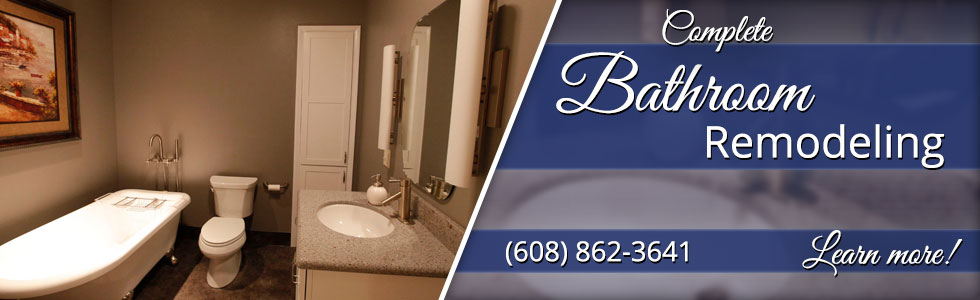


Home Improvement & Remodeling in Madison, WI
Tucker Family Construction, LLC is a small, family-owned home improvement company in Brodhead, just outside of Madison, WI. Fully licensed and insured, our mission is to provide quality work for reasonable prices with a focus on outstanding customer service for all of our clients, from extensive home additions to important projects like basement finishing, bathroom remodeling, and much more. We are your one-stop shop for home improvements in Madison and surrounding areas. For a free estimate on any project, contact us today at (608) 862-3641.


Home Remodeling Services
As trusted remodeling contractors in Madison, WI, Tucker Family Construction has the skills and expertise to address every family’s home renovation needs. Our seasoned general contractors have nearly two decades of kitchen remodeling, basement finishing, and bathroom remodeling experience. From minor bathroom, basement, and kitchen remodel updates to complete overhauls, our expert remodeling contractors love working with our clients to design and build the perfect spaces.
Our work doesn’t stop at exceptional interior services. Our experienced general contractors also provide an array of exterior home improvement services, including siding installation and roofing repairs. Let our skilled garage builders and roofing contractors take charge of all your home renovation projects big and small such as home additions, deck building, siding work, and door installation services. With our experts installing your replacement windows, you can rejuvenate the look and feel of your home while lower those energy bills at the same time.
Receive a Free Estimate!
Contact Our Remodeling Experts
A Family Business
Tucker Family Construction began in California as a small weekend project for owner William Tucker. Since then, it has blossomed into a full-time home, bathroom, kitchen remodeling, and construction business. In 2004, the family moved to Wisconsin and restarted the business, focusing on Madison and the surrounding areas.
As experienced general contractors, Tucker has completed numerous construction projects for nearly 20 years and relies on only the most professional, dedicated contractors to help achieve quality services. Our team is made up of skilled craftsmen who complete detailed renovations, from bathroom remodeling to roofing jobs, in a timely manner. We can also hire a mini digger if you require us to do any ground work around your house.
Tucker Family Construction’s goals are to help everyone succeed:
- Provide customers with high quality home improvement services at affordable rates
- Complete every job in a timely and efficient manner
- Contribute professional advice and service
- Maintain a safe and positive work environment
- Offer home remodeling services that the company is proud to put its name on
The Low-Price Guarantee
For every home renovation project, trust the professionals at Tucker Family Construction. Our radon services are ideal for maintaining happy and healthy homes. Review our frequently asked questions for help on your next home, kitchen, basement, or bathroom remodel project. When you want it done right for less, contact us at (608) 862-3641. We would love to tell you more about the services we offer.